
Interior design is about making your home look attractive, comfortable, and practical. A well-designed space reflects your personality while meeting your daily needs. With the right colors, furniture, lighting, and decorations, you can improve any room without spending too much money.
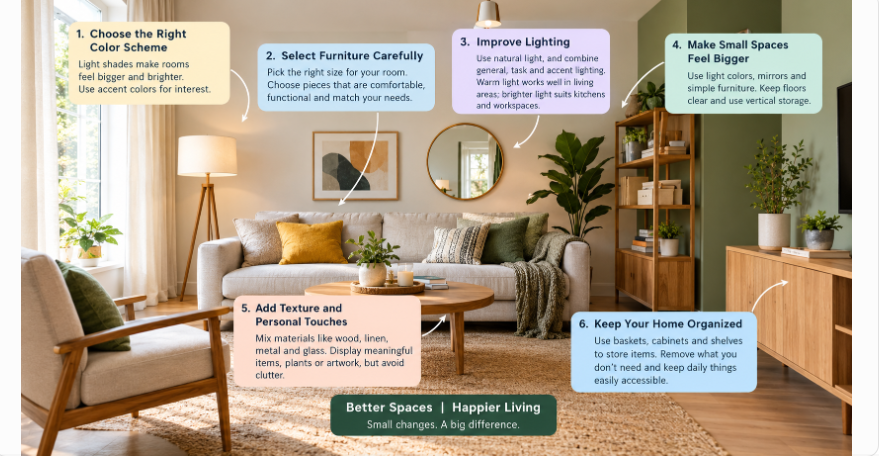
1. Choose the Right Color Scheme
Colors have a strong effect on the appearance and mood of a room. Light shades, such as white, cream, and beige, can make small spaces feel larger and brighter. Dark colors add depth and create a cozy atmosphere.
Use Colors That Work Together
Choose two or three main colors for a balanced look. Use neutral shades for walls and large furniture, then add brighter colors through cushions, rugs, artwork, or curtains. This approach keeps the room attractive without making it look crowded.
2. Select Furniture Carefully
Furniture should match the size of your room and support your daily activities. Large furniture can make a small room feel cramped, while very small pieces may look unsuitable in a large space.
Measure your room before buying furniture. Leave enough space for walking and opening doors. Choose pieces that offer both comfort and function, such as storage beds, folding tables, or sofas with hidden storage.
3. Improve Lighting
Good lighting makes a room more welcoming and useful. Whenever possible, allow natural light to enter through windows. Use light curtains instead of heavy ones if you want to brighten the space.
Combine three types of lighting: general lighting for the whole room, task lighting for activities such as reading or cooking, and accent lighting to highlight artwork or decorative features. Warm lighting works well in bedrooms and living rooms, while brighter lighting is useful in kitchens and work areas.
4. Make Small Spaces Feel Bigger
Small rooms can look spacious with a few simple changes. Use light colors, mirrors, and furniture with exposed legs to create an open appearance. Mirrors can reflect natural light and make a room seem larger.
Avoid filling every corner with furniture or decorations. Keep floors and pathways clear, use vertical shelves for storage, and choose multipurpose furniture to save space.
5. Add Texture and Personal Touches
A beautiful room needs more than matching colors and furniture. Different textures add warmth and visual interest. Combine materials such as wood, cotton, linen, metal, and glass to create a balanced design.
Display a few meaningful items, such as family photographs, plants, books, or artwork. Choose decorations that reflect your taste, but avoid displaying too many objects. A clean, organized space often looks more attractive.
6. Keep Your Home Organized
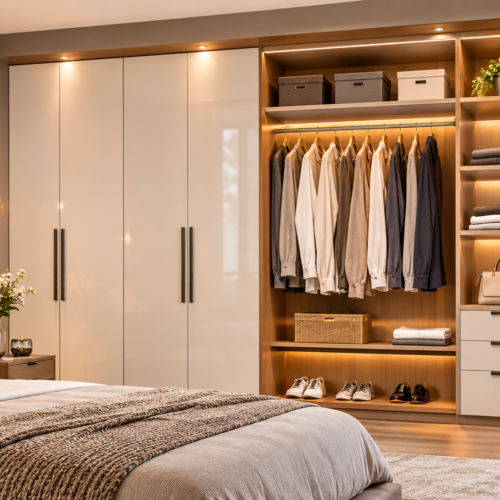
Good organization is an important part of interior design. Use baskets, cabinets, shelves, and storage boxes to keep everyday items in their proper places. Regularly remove unnecessary belongings to reduce clutter.
Keep frequently used items easy to reach and store seasonal items out of sight. An organized home looks cleaner, feels more comfortable, and is easier to maintain.
Conclusion
Effective interior design does not require expensive furniture or professional help. By choosing suitable colors, arranging furniture wisely, improving lighting, and keeping spaces organized, you can create a home that is stylish, practical, and comfortable. Focus on your needs, make thoughtful choices, and improve your space one step at a time.